
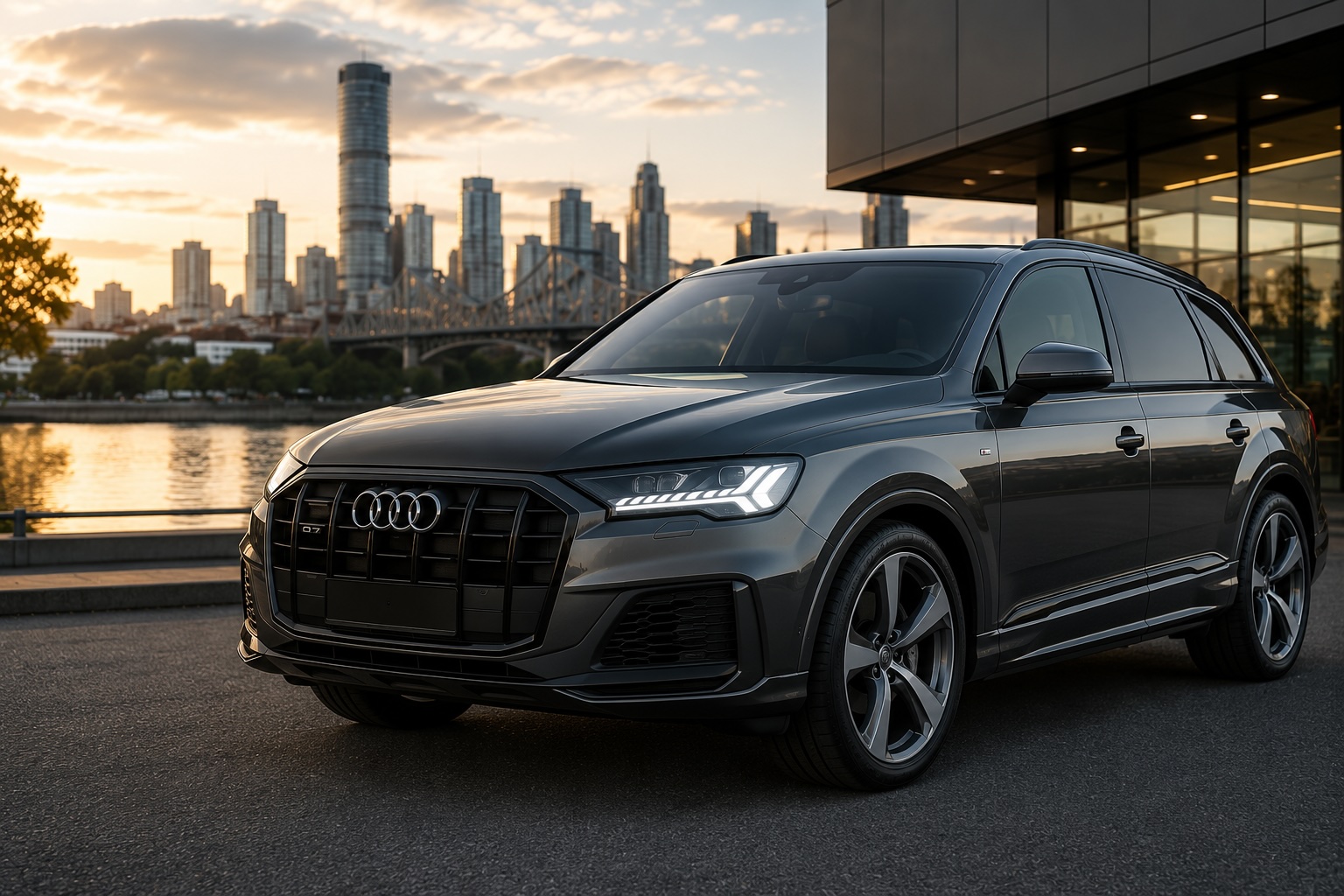
The Audi Q7 sits in a particular position in the Australian prestige SUV market. It is the seven-seat full-size SUV that arguably defined the segment in 2005, has run through two full generations, and offers buyers in 2026 a wide spread of options across age, specification, and price. A well-bought example delivers refined long-distance touring and the build quality the marque is known for. A poorly-bought example delivers a cascade of small electronic frustrations and a service bill that arrives sooner than expected.
This guide sets out which generation suits which buyer, what to inspect, and where the ownership cost realities sit in the Audi second hand market as it stands today.
Generations and where each one sits in the market
The first-generation Q7, internal code 4L, was produced from 2005 to 2015. It launched alongside the platform-shared Volkswagen Touareg and Porsche Cayenne. The 3.0-litre V6 TDI diesel became the default Australian variant, with the 4.2-litre V8 TDI a rarer curiosity.
The second-generation Q7, internal code 4M, arrived in 2015 on the MLB Evo platform shared with the Bentley Bentayga, Lamborghini Urus, and current Porsche Cayenne. It is the cleaner-sheet design, with substantial weight reduction over the 4L, the Virtual Cockpit cabin from later production, and a more refined ride. The 3.0 TDI continued as the volume seller, supported by the 3.0 TFSI petrol and the SQ7 with its V8 TDI.
A Q7 in the Audi second hand market in 2026 effectively means a choice between a late-cycle 4L, an early 4M, or a mid-cycle 4M with the post-facelift updates from 2019 onward.
Variants to favour
For the 4L generation, the 3.0 TDI common-rail engine from roughly 2008 onward is the strongest combination of refinement, economy, and reliability. Earlier 4L V6 TDI variants used a different injection arrangement that is less favoured on the used market. Among petrol options, the 3.6 V6 FSI is functional but thirsty, and the 4.2 V8 FSI is rare and expensive to run.
For the 4M generation, the 3.0 TDI is the volume sweet spot. The 3.0 TFSI petrol suits urban buyers who do not need diesel torque. The SQ7 is a specific buyer's car, and prices reflect that.
Across both generations, optional equipment matters. Adaptive air suspension, panoramic sunroof, Bang and Olufsen audio, S line trim, and the seven-seat third row each affect resale and ownership experience. A car specified with the right options on day one is worth more now than one specified bare.
The inspection priorities
The single most useful step for any Audi second hand Q7 purchase is a pre-purchase inspection by an Audi specialist with VAG-group diagnostic tooling. A generic OBD scan will not surface the full module fault history. This is the inspection any serious Q7 buyer's guide treats as foundational, and it pays for itself.
Beyond the diagnostic scan, the practical checks group into four areas.
The MMI infotainment and electronics on the 4L generation are the most common source of small frustrations. Bluetooth dropouts, MMI screen pixel issues, and various module communication faults are well-documented patterns. Many are software-resettable, some require module replacement. Operate every function during inspection, not only those being demonstrated.
The 3.0 TDI engine, while broadly robust, carries known wear items that should be confirmed. The diesel particulate filter condition matters, particularly on cars driven mostly in urban conditions where the regeneration cycle does not complete. On later 4L and on 4M variants, the AdBlue system should be checked for sensor faults and tank integrity. Timing components on the 4M's V6 are generally durable, but a documented full service history with the correct oil specification is non-negotiable.
The ZF 8-speed automatic, which replaced the earlier 6-speed tiptronic in the 4M generation, has a strong reputation across the platform. The relevant inspection item is fluid service history. Audi's original "lifetime" recommendation has been widely revised in specialist practice to a fluid and filter change at around 60,000 to 80,000 kilometres. A car with documented transmission service is a more confident purchase than one without.
Air suspension, where fitted, is the fourth area. Symptoms include one corner sitting low after overnight parking, intermittent ride-height warnings, or a compressor that cycles audibly. Components are inspectable and repairable, but the cost is meaningful. Leave any prospective car parked overnight before inspection and walk around it cold.
Ownership cost realities
The ownership cost picture on any Audi second hand Q7 sits at the higher end of the prestige SUV segment, and an honest guide says so plainly. Servicing through Audi-authorised dealers is at the upper bracket of the market. A recognised VAG-group specialist independent can deliver the same standard at a lower cost, and many Q7 owners move to a specialist after the original Audi Service Plan expires.
Tyres are large and segment-priced. Brakes are large and segment-priced. Air suspension components, where serviced, are at the high end. Routine consumables are not. The car rewards a buyer who is comfortable with prestige-segment running costs and has chosen a specialist they trust.
On purchase pricing, an early 4L 3.0 TDI in average condition sits at entry-level pricing for the prestige SUV segment. A well-presented late-cycle 4L 3.0 TDI moves into the middle of the segment band. A mid-cycle 4M 3.0 TDI in good condition typically sits in the high thirties to mid fifties on the Audi second hand market, with options, condition, and service history pushing higher. The SQ7 carries a substantial premium and lives in its own pricing tier.
Buying with the right starting point
A serious purchase in the Audi second hand Q7 conversation rests on three things: the right variant for the way the car will be used, a thorough pre-purchase inspection, and documented service history. At MCT Motorsport, every Q7 in inventory is hand-selected with those criteria already applied, and the provenance is presented alongside the car rather than produced on request.
If you are working through the Audi second hand market against a specific car you have in mind, or want to see current inventory through the Brisbane showroom or the national online platform, contact the MCT Motorsport team to begin a considered conversation about which Q7 fits the way you actually drive.