
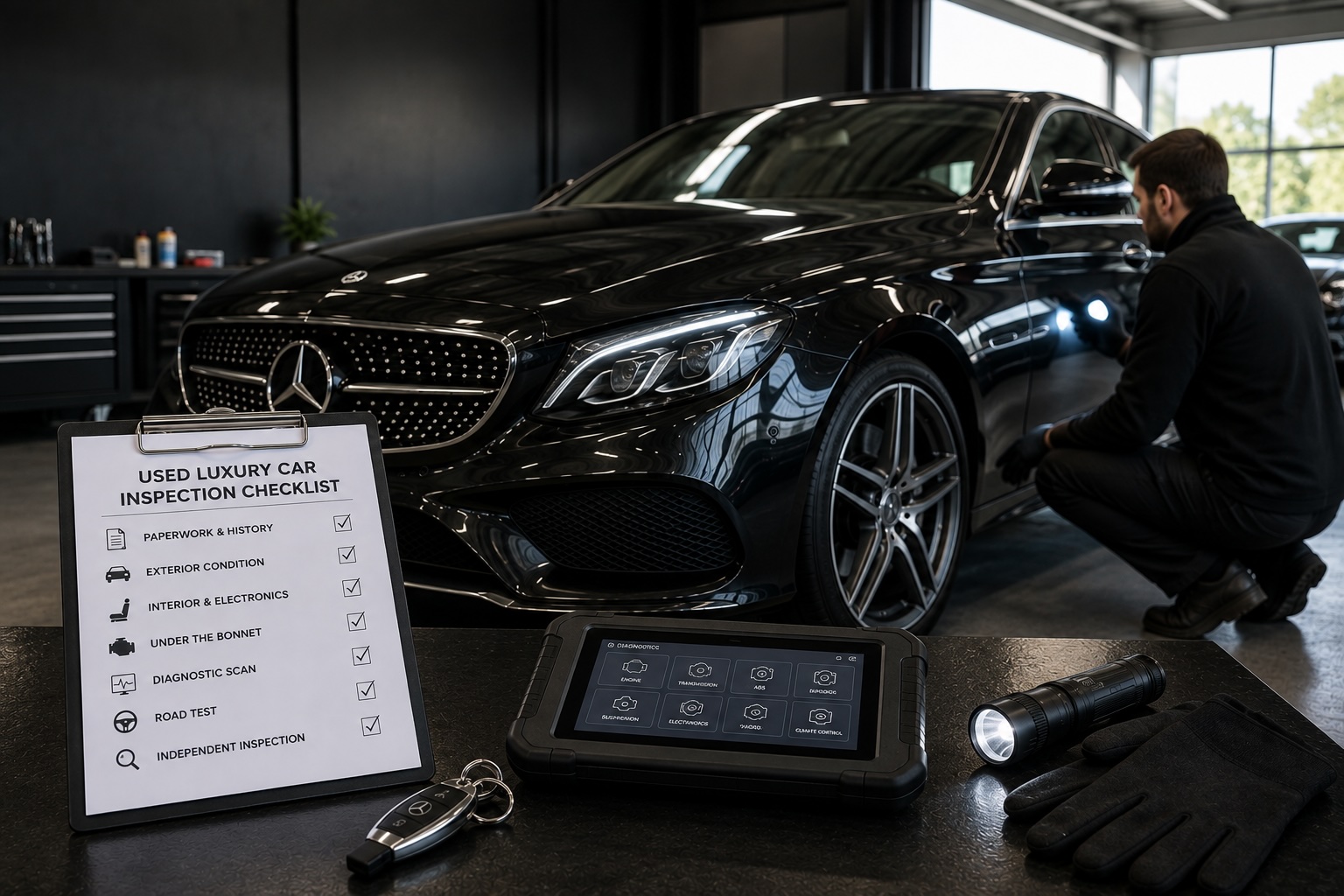
Two used luxury cars can appear almost identical in an online listing. They may be the same model, similar in age and have almost identical kilometres, yet their condition and ownership history can make them completely different propositions.
That is why inspecting a prestige vehicle requires more than checking the paintwork and taking it around the block. Modern luxury cars combine sophisticated drivetrains, complex electronics, premium interiors and advanced suspension systems, all of which deserve attention before you buy.
A structured inspection can help uncover potential problems while giving you a much clearer picture of how the vehicle has been treated throughout its life.
Here is what to check when inspecting a used luxury car.
Check the Paperwork First
History Before Condition
Before inspecting the vehicle itself, start with its history.
Ask to see the available service records and look beyond whether the logbook simply contains stamps. Check the dates, kilometres and workshops responsible for servicing the vehicle. Consistent servicing through authorised dealerships or recognised marque specialists can provide valuable insight into how the car has been maintained.
Compare the recorded kilometres across the vehicle's history to make sure the progression makes sense.
It is also worth completing a PPSR check against the VIN. This can help identify whether there is a registered security interest over the vehicle and provide information about its written-off or stolen status.
Where available, an original build sheet or options list can also be useful. Luxury vehicles often have extensive factory option lists, so knowing the original specification helps confirm exactly what you are buying.
If the history is incomplete, that does not automatically make the vehicle unsuitable, but it should influence how closely you inspect everything that follows.
Inspect the Exterior
Look Beyond the Shine
Inspect the car outdoors or somewhere with strong, even lighting. Highly polished paint can hide imperfections surprisingly well under showroom lights.
Walk around the vehicle slowly and look along each panel rather than directly at it. Differences in paint colour, texture or reflection can indicate previous paintwork, while inconsistent panel gaps or shut lines deserve closer investigation.
Check the wheels for curb damage and evidence of previous repairs, particularly on larger alloy wheels.
Tyres can also tell you plenty about how a vehicle has been maintained. Check that the tyres are appropriate for the vehicle, examine tread depth and look for uneven wear across each tyre.
Uneven wear may point towards alignment or suspension issues, while significantly different tyre brands or ages can indicate that maintenance has been approached primarily on cost.
Inspect the Interior
Wear Tells a Story
The condition of the cabin should make sense alongside the vehicle's age and kilometres.
Pay particular attention to high-contact areas such as the driver's seat bolster, steering wheel, pedals, centre console and frequently used switches. Excessive wear on a relatively low-kilometre vehicle deserves further investigation.
Then test the equipment.
Luxury cars can contain an enormous number of electrical systems, so operate as much as possible. Check the electric seats in every direction, windows, mirrors, central locking, climate control, heated or ventilated seats, sunroof and powered tailgate where fitted.
Spend time with the infotainment system too. Connect a phone, test the cameras, navigation, audio system and digital displays, and check that there are no persistent warning messages.
Small electronic problems can easily be missed during a quick inspection but become frustrating once you own the vehicle.
Look Under the Bonnet
Start It Cold
Where possible, inspect the vehicle before the engine has been started for the day.
A cold start can reveal noises or behaviours that may disappear once the engine reaches operating temperature. Listen carefully during the first 30 seconds and watch for warning lights that remain illuminated.
Under the bonnet, inspect fluid levels and look around the engine bay for obvious leaks, residue or signs that fluids have been escaping.
The underside deserves attention as well. Engine, transmission and differential leaks can be difficult to spot from above, which is one reason a professional inspection on a hoist is so valuable.
Vehicles equipped with air suspension deserve additional attention. If possible, observe how the vehicle sits after being parked for an extended period and test each available suspension height setting.
Scan the Electronics
Check What You Can’t See
Modern luxury cars rely heavily on interconnected electronic control modules.
That means a vehicle can appear perfectly normal during a short test drive while still carrying stored or intermittent faults.
A diagnostic scan using equipment appropriate for the particular marque can interrogate systems throughout the vehicle rather than simply checking basic engine codes.
Depending on the vehicle, this can provide additional insight into systems including the engine, transmission, suspension, infotainment, safety technology and other electronic modules.
For a serious purchase, particularly a sophisticated European performance or luxury vehicle, a comprehensive diagnostic scan can be one of the most valuable parts of the inspection process.
Take a Proper Test Drive
Drive More Than Around
A five-minute drive around the dealership is unlikely to tell you enough.
Try to include a mixture of low-speed streets, faster roads and parking manoeuvres. This allows you to experience the vehicle under several different conditions.
Pay attention to how smoothly the transmission shifts at light throttle and how it responds when accelerating more firmly. Check the steering at low speeds and listen for unusual suspension noises over bumps or uneven surfaces.
When safe to do so, test the brakes progressively and check for vibration, pulling or unusual noises.
Spend part of the drive with the audio system switched off. Listen for rattles, suspension knocks, wind noise or other sounds that might otherwise be hidden.
Most importantly, give the vehicle enough time to reach normal operating temperature. Some problems only become apparent once the drivetrain is warm.
Get a Specialist Inspection
Independent Expert Check
Even a thorough personal inspection cannot replace having the vehicle examined by someone who knows the particular model.
For a prestige vehicle, consider using a specialist familiar with the marque rather than relying solely on a general inspection.
A specialist may already know the common wear points and model-specific issues worth investigating and can put the vehicle on a hoist to inspect areas that are difficult to assess during a normal viewing.
A pre-purchase inspection adds another expense to the buying process, but compared with the value and potential repair costs of a luxury vehicle, it can be money well spent.
Your Used Luxury Car Checklist
Before You Buy
Before committing to a used luxury vehicle, work through these essentials:
- Review the service history and supporting documentation
- Check the VIN and complete a PPSR search
- Inspect paintwork, panels and wheels carefully
- Check tyre condition and wear patterns
- Compare interior wear with the recorded kilometres
- Test the vehicle's electrical equipment and infotainment
- Inspect for visible fluid leaks or residue
- Start the engine from cold where possible
- Test suspension settings where fitted
- Complete a marque-appropriate diagnostic scan
- Take an extended road test
- Arrange an independent specialist inspection
No single item tells you everything about a used car. Together, however, they create a much clearer picture of its condition and how well it has been maintained.
What Does a Well-Prepared Car Look Like?
Evidence Builds Confidence
A properly presented prestige vehicle should not require the buyer to uncover its story from scratch.
Its history should be available for review, its condition should reflect its age and kilometres, and the seller should be comfortable answering questions about servicing, specification and provenance.
At MCT Motorsport, our vehicles are inspected before being offered for sale, with available service history and provenance presented alongside the vehicle. Buyers are also welcome to arrange their own independent inspection of a vehicle they are considering.
Explore Luxury Cars at MCT Motorsport
Buying a used prestige vehicle should be about finding the right example, not simply the right badge.
MCT Motorsport offers a curated selection of used luxury and performance vehicles available through our Brisbane showroom and to buyers nationally.
Explore the current MCT Motorsport inventory or speak with our team about the history, condition and specification of any vehicle you are considering.