
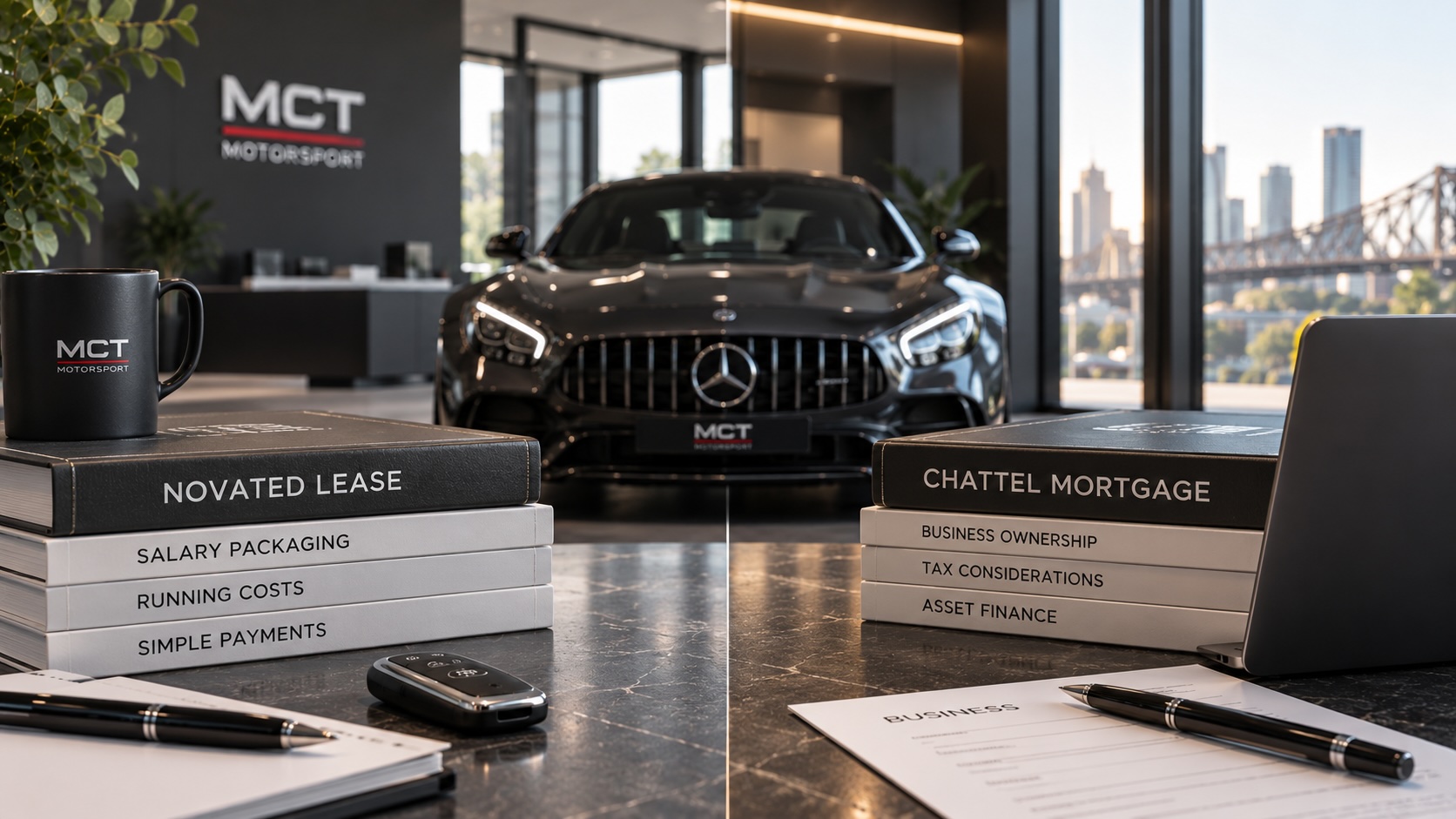
Choosing the right prestige vehicle is only one part of the purchase. For buyers financing through their employment or business, the way the vehicle is funded can be just as important.
Two structures commonly considered are a novated lease and a chattel mortgage. While both can provide a pathway into a prestige vehicle, they are designed for very different circumstances.
If you are exploring luxury cars for sale, understanding the basics of each option can help you have a more informed conversation with your accountant or finance specialist.
_
This article provides general information only and does not constitute financial or tax advice. Eligibility, tax treatment and suitability depend on individual circumstances._
Novated Lease: Luxury Motoring Through Your Salary
A novated lease is a salary packaging arrangement involving you, your employer and a finance provider.
Rather than simply making repayments on a traditional car loan, payments are managed through your salary. Depending on the arrangement, costs such as registration, insurance, servicing and fuel may also be bundled together.
For eligible salaried employees, this can make managing the ongoing costs of a prestige vehicle more convenient. Instead of dealing with several separate expenses throughout the year, much of the vehicle budget can be incorporated into a regular deduction.
The potential financial or tax benefits depend on your salary, employer, vehicle and lease structure, so these should always be assessed professionally.
Best suited to: Salaried employees whose employer offers novated leasing and who value a convenient, bundled approach to vehicle expenses.
Chattel Mortgage: Prestige Vehicle Ownership for Business
A chattel mortgage takes a different approach. It is primarily designed for businesses purchasing vehicles for business use.
Under this structure, the business generally takes ownership of the vehicle at purchase while the lender holds security over it until the finance has been repaid.
For business owners, sole traders and companies, this can make a chattel mortgage worth considering when a prestige vehicle has a genuine business purpose.
Depending on individual circumstances and business use, there may also be GST, depreciation and other tax considerations. These should be discussed with a qualified accountant rather than treated as automatic benefits.
Best suited to: Businesses, sole traders and eligible operators wanting to own the vehicle while financing its purchase.
Novated Lease vs Chattel Mortgage: What Is the Difference?
The biggest distinction is who each structure is designed for.
A novated lease is generally centred around an employee and their salary package. A chattel mortgage is centred around a business acquiring and financing an asset.
The way expenses, ownership and potential tax considerations are handled also differs significantly. That means there isn't one option that is inherently better than the other.
For someone comparing luxury cars for sale, the starting point should therefore be their own circumstances rather than the vehicle alone.
Key takeaway: Your employment status, intended vehicle use and financial circumstances will usually determine which option deserves closer consideration.
Which Finance Structure Could Suit You?
A novated lease may be worth exploring if you are a salaried employee, your employer supports salary packaging and you like the convenience of combining vehicle finance and eligible running costs.
A chattel mortgage may be more relevant if you operate a business and the vehicle will be used primarily for legitimate business purposes. It can provide the business with ownership of the vehicle while the purchase is financed.
The distinction becomes less straightforward when a vehicle has mixed personal and business use. In those circumstances, professional advice becomes particularly important because the treatment of expenses and potential benefits can depend on how the vehicle is genuinely used.
Financing a Prestige Vehicle: What Else Should You Consider?
Financing a prestige vehicle can involve considerations beyond choosing between two finance structures.
The age and value of the vehicle, loan term, expected residual or balloon, deposit, provider requirements and individual vehicle eligibility can all influence the final arrangement.
This becomes particularly relevant when shopping for pre-owned prestige and performance vehicles. Some providers may have different criteria for used vehicles, particular marques or older models.
Vehicle history also matters. A well-maintained prestige vehicle with documented provenance and a comprehensive service history provides greater clarity around exactly what is being purchased.
For buyers considering luxury cars for sale, it is worth assessing the vehicle and finance together rather than treating them as completely separate decisions.
Finding the Right Luxury Car Comes First
Before deciding how to finance a prestige vehicle, you need to find one that deserves a place in your garage.
At MCT Motorsport, our focus is on sourcing and presenting carefully selected prestige, luxury and performance vehicles. Our team can walk you through the vehicle itself, including its specification, condition and available history, so you have the information needed before progressing with your finance specialists.
We are not a lender, finance broker or financial adviser, and we do not provide financial or tax advice. Where appropriate, we can help connect buyers with specialists who can discuss finance options based on their individual circumstances.
Explore Luxury Cars for Sale at MCT Motorsport
Whether a novated lease, chattel mortgage or another finance option ultimately suits you, the process begins with finding the right vehicle.
Explore the current selection of prestige and performance vehicles at MCT Motorsport, or speak with our team about the vehicle that has caught your attention.