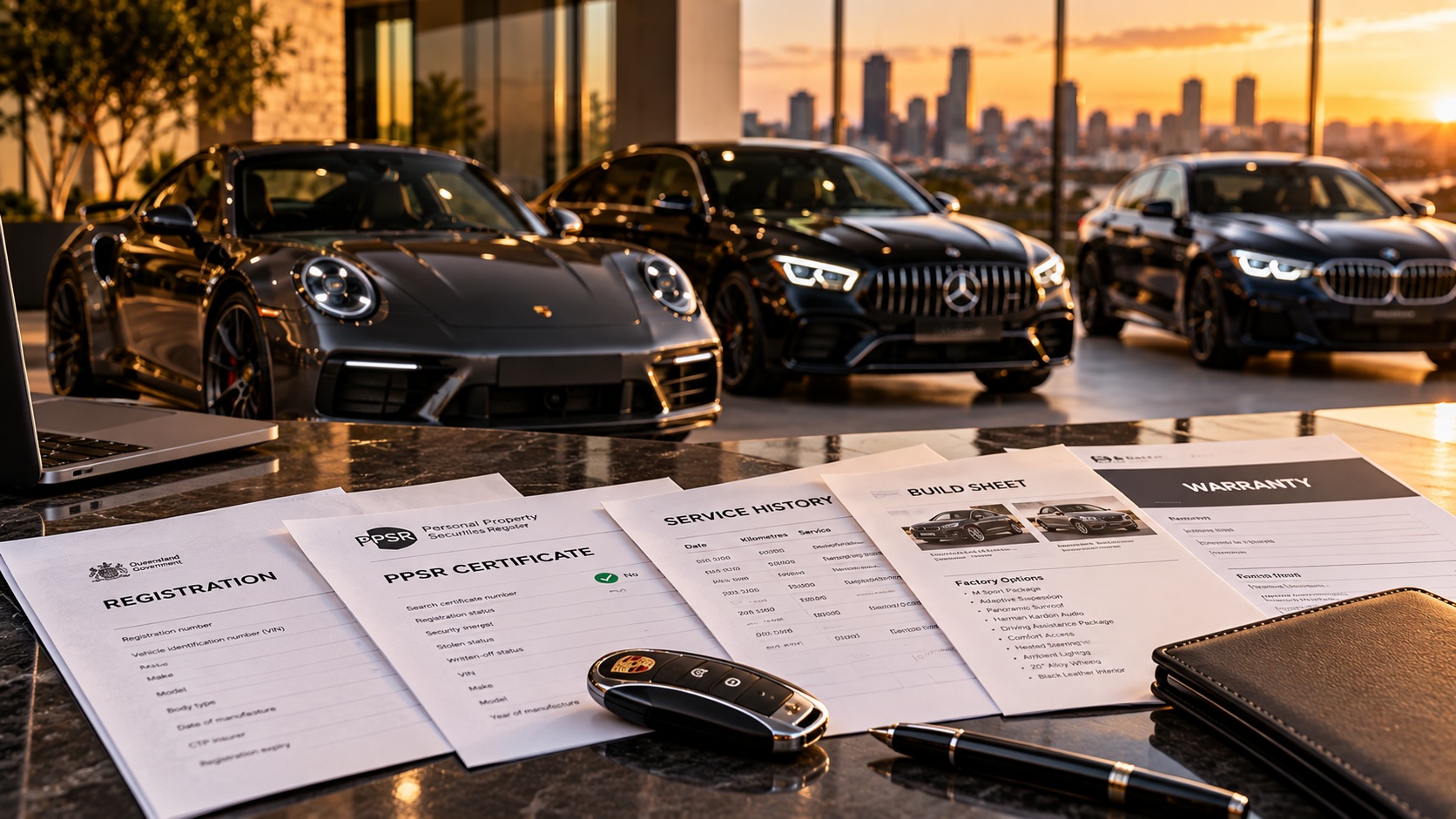
Purchasing a luxury vehicle is an exciting experience, whether you're considering a refined European sedan, a premium SUV or a high-performance sports car. However, beyond the craftsmanship, advanced technology and impressive driving dynamics, there is another important consideration: the vehicle's documentation.
When buying a pre-owned prestige vehicle, paperwork can reveal details that are not immediately apparent during a test drive or visual inspection. From outstanding finance and previous repairs to factory specifications and maintenance records, the right documents help establish a vehicle's history and provide greater confidence in your purchase.
A beautifully presented luxury car may attract your attention, but its supporting documentation helps you understand exactly what you are buying.
Before you buy a used luxury car, it is worth knowing which documents to request, what information they provide and why they matter.
Here are the essential records every Australian prestige car buyer should consider reviewing.
1. Vehicle Registration and Seller Identification
One of the first steps when purchasing a used luxury vehicle is confirming its registration details and the seller's authority to complete the transaction.
Ask to review the vehicle's current registration information and confirm that the Vehicle Identification Number (VIN), registration number and other identifying details match the vehicle being offered.
It is also important to establish that the seller has the legal authority to sell the car.
In Australia, the person listed as the registered operator is not necessarily the vehicle's legal owner. Registration records alone do not establish ownership, so buyers should seek appropriate supporting documentation and confirmation of the seller's authority.
If purchasing privately, request suitable identification and clarify whether the seller owns the vehicle outright or is acting on behalf of another party.
When purchasing through a licensed dealership, confirm the business details and ensure the transaction documentation clearly identifies the selling entity.
Why it matters: Verifying registration details and the seller's authority helps reduce the risk of purchasing a vehicle with disputed ownership or incorrect identifying information.
2. Personal Property Securities Register (PPSR) Report
A PPSR check is one of the most important steps when purchasing a used vehicle in Australia, particularly when considering a high-value luxury or performance car.
The Personal Property Securities Register is a national register that allows buyers to search for registered security interests against personal property, including motor vehicles.
A vehicle search using its VIN can help identify whether a security interest has been registered, which may indicate that the vehicle is being used as security for finance.
A PPSR search may also provide recorded information about whether the vehicle has been reported stolen or written off.
This is especially important when purchasing privately. If a vehicle is subject to an existing security interest, there may be a risk of repossession depending on the circumstances and applicable legal protections.
A PPSR search should be completed close to the time of purchase, with the details carefully checked against the vehicle.
Buyers can obtain an official report through the Australian Government PPSR website.
Keep in mind that a PPSR report is not a comprehensive vehicle history or mechanical inspection. It does not establish that a vehicle is free from every form of damage, repair or ownership dispute.
Why it matters: A PPSR report helps identify registered security interests and certain recorded vehicle history information before you commit to a significant purchase.
3. Complete Service History and Maintenance Records
Luxury and performance vehicles are often engineered with sophisticated mechanical systems, advanced electronics and specialised components.
As a result, appropriate servicing plays an important role in maintaining their performance, reliability and long-term appeal.
Before purchasing, request the vehicle's available service history, including logbooks, maintenance invoices and manufacturer digital service records where applicable.
What Should a Luxury Car Service History Include?
A comprehensive maintenance record may contain:
- Manufacturer logbook entries showing scheduled servicing.
- Invoices from authorised dealerships or qualified independent specialists.
- Digital service records maintained by the manufacturer.
- Documentation of major mechanical repairs or component replacements.
- Records of maintenance involving brakes, tyres, transmission systems and other important components.
For vehicles such as a Porsche 911, BMW M3 or Mercedes-AMG performance model, it can be particularly useful to establish whether maintenance has been carried out in accordance with the manufacturer's recommendations.
A vehicle with consistent servicing and supporting documentation may offer greater reassurance than an otherwise similar example with significant gaps in its maintenance history.
However, an incomplete logbook does not automatically indicate poor maintenance. Some vehicles may have been serviced by independent specialists whose records are held separately.
Why it matters: A documented service history provides insight into how the vehicle has been maintained and can support buyer confidence and future resale appeal.
4. Original Build Sheet and Factory Specifications
One of the defining characteristics of the prestige automotive market is the level of personalisation available when purchasing a vehicle new.
Luxury manufacturers frequently offer extensive choices of engines, interior materials, wheel designs, technology packages and performance equipment.
Consequently, two vehicles of the same model and year may differ significantly in specification and desirability.
Before you buy a used luxury car, consider requesting the original build sheet, factory specification report or equipment list where available.
Why Are Factory Options Important?
A manufacturer's build sheet can help establish the vehicle's original configuration, including factory-fitted features and optional equipment.
Depending on the model, these details may include:
- Original exterior paint and interior upholstery.
- Engine and transmission configuration.
- Factory wheel and suspension options.
- Premium audio and infotainment packages.
- Performance upgrades and driver assistance technology.
- Optional comfort and luxury equipment.
This information can be particularly valuable when considering enthusiast-focused models, where specific factory options may influence desirability and market value.
For example, a Porsche equipped with a sought-after sports package or a BMW M model featuring desirable factory performance equipment may attract different buyer interest from a more conventional example.
Factory documentation can also help distinguish original equipment from modifications or accessories added later.
Why it matters: Confirming the original specification helps buyers understand the vehicle's equipment, authenticity and potential market appeal.
5. Manufacturer Warranty and Extended Warranty Documents
Warranty coverage is another important consideration when purchasing a pre-owned luxury vehicle.
Some relatively recent prestige cars may retain part of their original manufacturer warranty, while others may have additional coverage through a certified pre-owned program or separate warranty arrangement.
Before purchasing, ask whether any warranty applies and request the relevant documentation.
What Should You Check?
Review the warranty terms carefully, paying particular attention to:
- The remaining warranty period and any kilometre limits.
- Which mechanical and electrical components are covered.
- Exclusions, conditions and claim limits.
- Servicing requirements.
- Whether the warranty transfers to a subsequent owner.
- The process for arranging repairs or submitting claims.
Do not assume that an extended warranty provides the same level of protection as the original manufacturer's warranty.
Coverage varies between providers, and some components or types of repairs may be excluded.
It is also important to distinguish voluntary warranty products from statutory protections and consumer guarantees that may apply under Australian law.
Why it matters: Understanding the available warranty coverage helps you assess potential ownership risks and avoid unexpected assumptions about repair protection.
6. Roadworthy or Safety Certificate
Depending on the state or territory where the vehicle is being sold and registered, a roadworthy or safety inspection certificate may be required as part of the ownership transfer process.
In Queensland, a safety certificate is generally required when selling a registered light vehicle, subject to applicable exemptions.
The certificate confirms that the vehicle met certain minimum safety requirements at the time of inspection.
However, a safety certificate is not the same as a comprehensive mechanical inspection.
It does not necessarily assess the long-term condition of the engine, transmission, electronics or other complex systems commonly found in luxury vehicles.
For this reason, buyers should avoid treating a current safety certificate as a guarantee of overall mechanical reliability.
When purchasing an interstate vehicle, it is also important to understand the registration and inspection requirements that apply in the destination state or territory.
Why it matters: Confirming the applicable safety certificate requirements can help avoid delays during registration transfer while providing information about the vehicle's basic roadworthiness.
7. Repair Records and Previous Accident Documentation
A vehicle's appearance does not always reveal the full extent of its repair history.
Modern luxury cars often feature sophisticated body structures, advanced safety technology and complex electronic systems. Repairs following an accident may therefore require specialised equipment and expertise.
Before purchasing, ask whether the vehicle has undergone significant accident repairs or major mechanical work.
Where available, request invoices, repair reports or supporting documentation explaining what was completed.
What Should You Look For?
- Useful records may include documentation of:
- Previous bodywork or structural repairs.
- Replacement mechanical components.
- Major transmission or engine repairs.
- Insurance-related repair work.
- Replacement tyres, brakes and suspension components.
- Significant electrical or electronic repairs.
Previous repairs do not necessarily make a luxury vehicle unsuitable for purchase.
A professionally repaired car with appropriate documentation may still represent a worthwhile option, depending on the nature of the work and its current condition.
However, unexplained repairs, inconsistent records or evidence of poor workmanship should prompt further investigation.
For additional reassurance, consider arranging an independent pre-purchase inspection by a qualified professional familiar with the particular make and model.
Why it matters: Repair documentation can help establish the extent and quality of previous work, reducing uncertainty about the vehicle's condition.
8. Import and Compliance Documentation
Australia's luxury car market includes both vehicles originally supplied through Australian dealerships and vehicles imported from overseas.
Some prestige and performance models may have been imported because of their rarity, specification or limited local availability.
If you are considering an imported vehicle, it is important to understand its history and confirm that the necessary import and compliance requirements have been satisfied.
Depending on the vehicle and its circumstances, relevant records may include import approval documentation, compliance information and evidence of the vehicle's registration eligibility.
Buyers should also check the vehicle's identification details and seek clarification about any differences between Australian-delivered and overseas-market specifications.
Why Does Import History Matter?
Imported luxury vehicles may differ from Australian-delivered examples in areas such as:
- Factory equipment and specifications.
- Infotainment and navigation systems.
- Manufacturer warranty eligibility.
- Parts availability and servicing requirements.
- Insurance considerations.
- Future resale demand.
Import status does not automatically make a vehicle less desirable. In some cases, imported examples offer distinctive specifications or access to models that were not officially sold in Australia.
The important consideration is understanding the vehicle's background and any implications for ownership.
Why it matters: Import and compliance records help establish the vehicle's history and whether its documentation supports lawful registration and use in Australia.
9. Previous Ownership History
Understanding how a luxury vehicle has been owned and used can provide useful context when evaluating its overall condition.
A car with a consistent ownership and maintenance history may offer greater reassurance than one with unexplained gaps in its records.
However, the number of previous owners should not be considered in isolation.
A carefully maintained vehicle with several owners may be a better purchase than a single-owner example that has received inconsistent servicing.
Where available, ask for information about previous ownership, registration history and how the vehicle has been used.
Service records, invoices and other supporting documents may help establish a clearer picture of its history.
For performance vehicles, buyers may also wish to enquire about modifications, motorsport use or other factors that could influence mechanical condition and future maintenance requirements.
Keep in mind that a complete ownership history may not always be available, and registration documents do not necessarily identify every previous legal owner.
Why it matters: Understanding a vehicle's ownership background can help identify questions worth investigating before purchase.
10. Purchase Agreement and Transfer Documentation
Once you have reviewed the vehicle's history and are comfortable proceeding, the final step is ensuring the purchase itself is properly documented.
Whether buying from a dealership or private seller, request a written agreement or receipt clearly identifying the vehicle and the terms of the transaction.
What Should the Purchase Documentation Include?
Depending on the transaction, relevant details may include:
- The vehicle's make, model, year and VIN.
- The agreed purchase price.
- Seller and purchaser details.
- Payment arrangements and any deposit conditions.
- Included accessories and equipment.
- Applicable warranty information.
- Any agreed conditions or commitments relating to the sale.
Buyers should also confirm the process for transferring registration and any applicable transfer fees or duties.
If the vehicle has finance owing, obtain clear information about how the outstanding security interest will be discharged.
For a significant prestige vehicle purchase, ensuring the transaction is properly documented is an important part of protecting your interests.
Why it matters: Accurate purchase documentation provides a clear record of the transaction and helps reduce the potential for misunderstandings after the sale.
Why Documentation Matters Even More for Luxury and Performance Cars
While documentation is important for any used vehicle purchase, it can be especially valuable when considering prestige and performance models.
Luxury cars often feature expensive components, specialised servicing requirements and equipment that varies considerably between individual examples.
A complete service history, clear vehicle identification and accurate specification records can help establish whether the asking price reflects the car's condition and features.
Documentation can also influence future resale appeal.
When the time comes to sell or trade in your vehicle, prospective buyers may place considerable value on a well-organised maintenance history and supporting records.
Ultimately, the right paperwork does more than support the initial purchase. It contributes to a clearer understanding of the vehicle throughout your ownership.
How MCT Motorsport Helps You Buy with Confidence
At MCT Motorsport, we understand that purchasing a luxury or performance vehicle is a significant decision.
Beyond design, performance and prestige, buyers deserve the opportunity to understand the individual vehicle they are considering.
As an independent luxury and performance vehicle specialist, we recognise the importance of available service records, vehicle provenance, factory specifications and relevant ownership documentation.
Our team can help buyers review the information available for individual vehicles, discuss their specifications and understand the documentation relevant to their purchase.
Whether you are exploring a refined executive sedan, a premium SUV or an enthusiast-focused sports car, taking the time to assess the vehicle's background is an important part of making an informed decision.
We believe a considered approach to prestige motoring begins with understanding both the vehicle and the responsibilities of ownership.
Final Verdict: What Documents Should You Check Before Buying a Used Luxury Car?
Before purchasing a used luxury vehicle in Australia, taking the time to review its documentation can make a meaningful difference to your confidence in the purchase.
Registration details, PPSR reports, service history, factory specifications, warranty information and repair records all provide valuable insight into the vehicle's background.
For imported vehicles, compliance documentation deserves additional attention, while a clear purchase agreement helps establish the terms of the transaction.
No single document can guarantee that a vehicle is free from problems. However, reviewing the available records, confirming important information independently and arranging a suitable inspection can help reduce uncertainty.
When you buy a used luxury car, the goal is not simply to find a vehicle that looks exceptional. It is to understand its history, condition and suitability for your long-term ownership expectations.
Explore Used Luxury and Performance Cars at MCT Motorsport
Finding the right luxury vehicle involves more than selecting your preferred manufacturer or model. It means choosing a car that offers the right combination of performance, quality, specification and ownership confidence.
At MCT Motorsport, we offer a selection of prestige, luxury and performance vehicles for Australian buyers who appreciate distinctive design, exceptional engineering and rewarding driving experiences.
Explore our current luxury and performance vehicle inventory or speak with our team to learn more about available vehicles, their specifications and supporting documentation.